
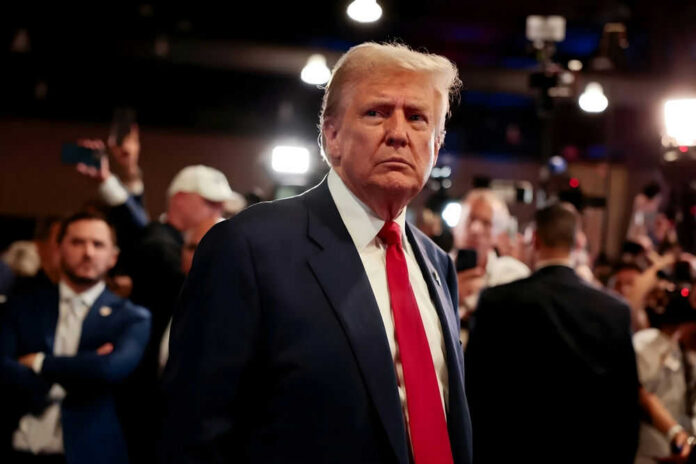
President Trump’s threat to fire Federal Reserve Chair Jerome Powell is setting up a rare showdown over who really controls America’s money—and what happens when Washington’s institutions collide.
Quick Take
- Trump told Fox Business he would fire Powell if the Fed chair doesn’t step aside when his term ends May 15, even if a successor isn’t confirmed.
- The clash is tied to Trump’s push for lower interest rates and a Justice Department probe into a costly Fed headquarters renovation.
- Courts have repeatedly blocked DOJ subpoenas tied to the probe, with a federal judge citing “essentially zero evidence” of a crime.
- Trump’s nominee, Kevin Warsh, faces a Senate confirmation process complicated by the unresolved investigation and internal GOP skepticism.
Trump’s Ultimatum Raises the Stakes for Fed Leadership
President Trump said in a Fox Business interview with Maria Bartiromo that he would remove Jerome Powell if Powell stays past the end of his chair term on May 15.
Trump’s comments emphasized that he is willing to act even if his preferred replacement, Kevin Warsh, has not yet cleared the Senate. That direct threat escalates a long-running dispute over interest rates into a high-stakes test of governance norms and legal boundaries.
Trump’s frustration is rooted in policy outcomes that affect households and businesses in real time. Higher rates raise borrowing costs for mortgages, car loans, and small-business credit, while also shaping the federal government’s cost of servicing debt.
Powell, for his part, has argued for central bank independence and has signaled he will not leave under political pressure alone. The practical question is whether an attempted firing would stand up legally.
President Trump says he will fire Fed Chair Jerome Powell if Mr. Powell doesn't leave by May 15. A criminal probe and a defiant senator are making that easier said than done. https://t.co/9o267TvQX6
— The Washington Times (@WashTimes) April 15, 2026
A Renovation Probe Becomes a Political Flashpoint
The immediate spark is an ongoing Justice Department criminal probe tied to the Federal Reserve’s multibillion-dollar headquarters renovation. Powell testified previously about the project, and the investigation has since generated subpoenas that have been blocked in court.
Chief Judge James Boasberg cited “essentially zero evidence” of criminal conduct when limiting the government’s efforts. That judicial finding matters because it undercuts “for cause” arguments.
Tensions rose again after prosecutors from U.S. Attorney Jeanine Pirro’s office made an unannounced visit to the Fed’s renovation site and were turned away.
The episode fed claims of stonewalling on one side and overreach on the other, while still leaving the core public record thin on proven wrongdoing. For voters already convinced the federal bureaucracy protects itself first, the back-and-forth is likely to read less like transparency and more like institutions fighting to avoid accountability.
Senate Confirmation Politics Could Force a Leadership Vacuum
Trump has nominated Kevin Warsh, but confirmation is not automatic—even with Republicans controlling the Senate. Sen. Thom Tillis has expressed opposition to moving forward while the probe remains unresolved, putting Warsh’s timeline at risk and raising the prospect of a gap at the top.
Separately, Fed rules allow for continuity mechanisms if a new chair is not confirmed, but that does not eliminate uncertainty about authority and legitimacy.
This is where process meets reality: markets price in uncertainty, and uncertainty grows when leadership becomes a political battlefield. Investors watch for signs that monetary policy will remain predictable rather than driven by electoral incentives.
At the same time, voters who feel crushed by inflation and borrowing costs want relief, not procedural stalemate. Those competing pressures create an opening for both parties to claim they are defending “the public,” while insiders argue over who gets to steer.
Why the Fight Matters Beyond Powell and Trump
At a basic level, the dispute is about whether an unelected central bank can resist an elected president’s economic agenda. That question lands differently across the political spectrum. Conservatives often support checks on entrenched bureaucracies and may see Fed independence as cover for unaccountable power.
Many liberals treat Fed independence as a safeguard against political meddling. The reality is that both camps increasingly distrust institutions they believe serve elites over ordinary workers.
Another layer is fiscal math. Analysis has argued Trump’s pressure for lower rates is tied not only to growth but also to the federal government’s ability to finance large deficits at lower cost.
Even if that motivation is partly true, the broader concern remains: rate policy can’t fix overspending, and cheaper borrowing can tempt Washington into even more debt. With inflation still a household memory, any perception that politics is steering monetary policy could trigger backlash.
Sources:
Trump Threatens to Fire Fed Chair Jerome Powell Before His Time Is Up
DOJ surprise visit to Fed deepens clash over Powell probe
Fox Business interview video (Maria Bartiromo)
The real reason Trump wants to fire the Fed Chair