
Qatar’s gas export heart just suffered a blast that killed 13 people, and the real story is still being fought over.
Quick Take
- Officials say the explosion was an accident, not sabotage, and they have opened an inquiry.
- The blast hit the Barzan local gas supply facility in Ras Laffan after operations had just resumed.
- Authorities say the fire is contained, exports are unaffected, and there was no public safety threat.
- The missing piece is simple and serious: Qatar has not yet released the technical evidence that would settle the cause.
The Blast Landed in the Middle of a Restart
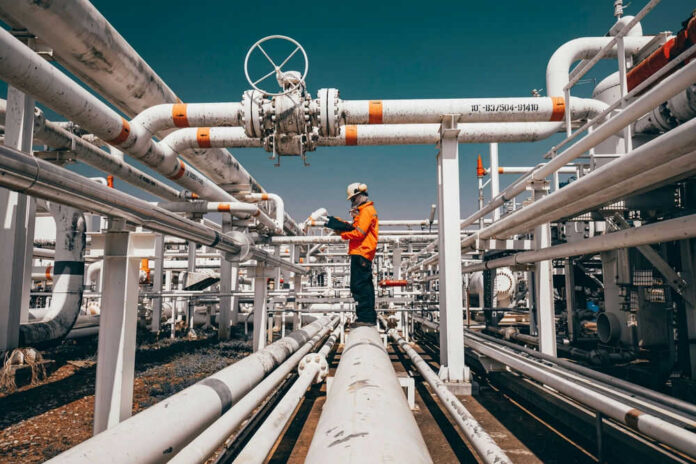
The explosion tore through Qatar’s Ras Laffan industrial zone as workers tried to bring the facility back online. Officials said the blast hit the Barzan local gas supply facility, where operations had been stopped for maintenance since December 2025 and resumed only two days before the incident.[1][6]
That detail matters. Restart periods are when systems are most vulnerable, and that is where the tension now sits: between a clear official explanation and the harder questions that follow every major industrial fire.
Qatar’s energy minister, Saad Sherida Al-Kaabi, said the blast was an accident and not sabotage or hostile in nature.[1][6] He also said the fire was brought under control, that there was no environmental danger, and that LNG exports would not be disrupted.[1][3][6]
The Interior Ministry echoed the key safety point, saying there was no gas leak threatening the public.[3][4] Those are strong official claims. They are also, for now, official claims.
What Officials Say, and What They Have Not Shown
The most important fact is not just the death toll. It is the gap between what Qatar says and what it has not yet shown. News reports say the government has launched an inquiry, but no public forensic report, sensor log, or maintenance record has been released to back up the “technical accident” explanation.[1][3][4]
That leaves outside readers with a familiar problem in high-stakes energy incidents: the people who operate the site also control the first version of events.
That does not prove sabotage. It does not prove negligence either. What it does prove is that the public has enough to trust the emergency response, but not enough to close the case. The casualty figures also changed as the story developed.
Early reports spoke of 54 injured and 18 missing, while later official counts put the toll at 13 dead and 66 injured.[2][5] Evolving numbers can happen in chaos, but they also deepen doubt.
Why the Sabotage Question Won’t Go Away
The timing of the blast gives the story its edge. Several reports tie the restart effort to earlier damage from an Iranian strike in March, which is why many readers immediately wondered whether this was another hostile act.[2][5]
That suspicion is understandable in a region where energy sites can become symbols in a wider conflict. Yet suspicion is not evidence. So far, Qatar’s officials have clearly denied sabotage, and no independent investigator has been publicly named.
An explosion at Qatar’s Ras Laffan gas export terminal injured at least 54 people and left 18 missing as workers tried to restart operations after Iranian attacks, officials said. The blast and fire at the Barzan facility, with a capacity of 1.4 billion cubic feet per day,… pic.twitter.com/TJtTxN20Tv
— NewsWire 🇱🇰 (@NewsWireLK) June 22, 2026
There is a deeper reason this case will continue to draw attention. QatarEnergy is not a distant observer. It is the operator, and its leader is also the country’s energy minister.[1][6]
That arrangement makes the official narrative look efficient, but it also makes it harder for outsiders to treat the first explanation as the final one. In any major industrial disaster, the public wants two things at once: speed and proof. Qatar has delivered speed. Proof is still pending.
What Will Decide the Story
The next phase will hinge on whether Qatar releases hard evidence. Maintenance logs, restart checklists, alarm records, and a technical timeline would tell readers far more than another press statement.[1][3]
Autopsy findings and injury analysis could also help determine whether this was primarily a blast-wave event, a fire event, or a structural collapse event.[2][5]
Until that evidence appears, the incident will remain trapped between two competing frames: an industrial accident on one side, and a cover-your-tracks suspicion on the other.
Sources:
[1] Web – Qatar says gas export terminal blast killed 13 as workers tried to …
[2] Web – 13 killed, dozens injured in Qatar’s Ras Laffan energy site explosion
[3] Web – 54 injured and 18 missing after explosion at Qatar LNG site – CNBC
[4] Web – Explosion at Qatar’s Ras Laffan LNG facility kills at least 13 | …
[5] Web – Explosion at Qatar Natural-Gas Plant Leaves 13 Dead, Dozens Injured
[6] Web – Explosion at Qatar Gas Plant Kills at Least 13 and Injures 66 – ny …