
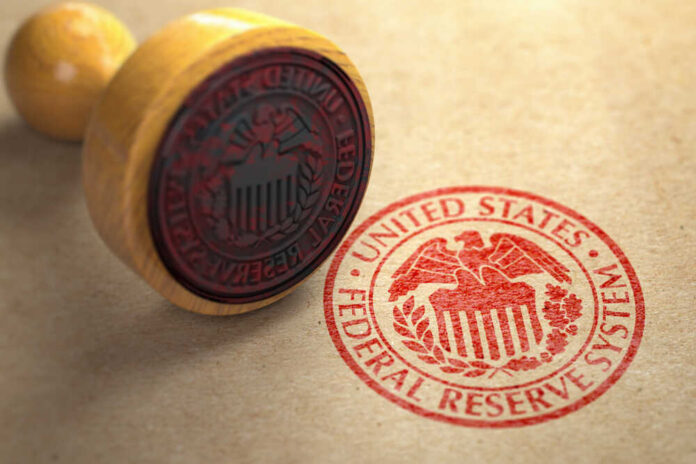
The Federal Reserve’s most divided vote since 1992 exposes a fractured board just as Jerome Powell exits, leaving incoming chair Kevin Warsh to navigate inflation hawks blocking Trump’s push for rate cuts.
Story Snapshot
- FOMC holds federal funds rate at 3.5%-3.75% unanimously on rates but records four dissents, highest since October 6, 1992.
- Three regional presidents oppose easing bias in statement amid elevated inflation from oil prices and Middle East tensions.
- Fed Governor Stephen Miran dissents for 25-basis-point cut, highlighting split between hawks and doves.
- Powell’s term ends May 15, 2026; Trump-nominated Warsh inherits divisions resisting political pressure for cuts.
- Markets face volatility as policy statement shifts to “elevated” inflation, delaying easing forecasts.
FOMC Meeting Delivers Unprecedented Dissent
On April 29, 2026, the Federal Open Market Committee unanimously voted to maintain the federal funds rate at 3.5%-3.75%. Four dissents marked the highest internal conflict since 1992.
Cleveland Fed President Beth Hammack, Minneapolis Fed President Neel Kashkari, and Dallas Fed President Lorie Logan rejected the policy statement’s easing bias. Fed Governor Stephen Miran pushed for a 25-basis-point cut. This 8-4 vote on the statement, with 11-1 on the rate hold, underscores deep policy rifts.
Fed holds rates steady but with highest level of dissent since 1992 https://t.co/h4Ro1opaEm
— CNBC International (@CNBCi) April 29, 2026
Inflation Pressures Fuel Hawkish Resistance
High oil prices and Middle East tensions, including the war in Iran, drove the Fed’s statement to describe inflation as “elevated,” dropping prior “somewhat elevated” language. Hawks prioritize price control over growth risks. Doves like Miran fear economic slowdown from prolonged high rates.
Geopolitical uncertainty heightens stakes, complicating consensus. This fracture aligns with common sense: tame inflation first to protect American families from eroding purchasing power.
The FOMC’s 19 members split along familiar lines. Regional presidents Hammack, Kashkari, and Logan supported steady rates but opposed signaling future cuts. Miran, who joined from Trump’s advisory role, dissented for easing at every meeting. Powell led his potentially final session, balancing divisions before his May 15 departure.
Leadership Transition Amplifies Divisions
Jerome Powell’s term ends May 15, 2026, paving the way for Kevin Warsh, Trump’s nominee. Warsh confronts a board resisting rate cuts despite presidential expectations. FOMC votes democratically, but the chair shapes consensus.
This transition tests Fed independence amid political pressure. Facts show hawks’ stance strengthens resolve against premature easing, upholding fiscal discipline over short-term stimulus.
Prior cuts in September through December 2025 eased policy amid softening economy. Holds in January and March 2026 followed inflation reacceleration from energy spikes. April’s meeting rejected easing signals, reflecting data-driven caution over optimism.
Fed holds rates steady but with highest level of dissent since 1992https://t.co/IoSqVWgEFj#personalfinance #money #theslowdollar
— TheSlowDollar (@TheSlowDollar) April 30, 2026
Market and Economic Ripples Emerge
Markets priced in the hold but discord sparks volatility. Borrowers endure high costs; businesses delay expansion; investors recalibrate cut timelines. Short-term uncertainty prolongs elevated rates.
Long-term, a fractured Fed delays easing, prioritizing inflation control. Households strain under energy-driven prices, validating hawks’ vigilance based on persistent facts.
Analysts call it a “historic dissent signaling fractured Fed.” Coverage emphasizes Warsh’s challenges. Hawks stress inflation priority; doves warn of recession. Consensus points to no quick path forward, with 1992 as the last comparable split.
Sources:
Fed Holds Rates Steady April 30: Highest Dissent Since 1992
Fed holds rates steady, but board vote is most divided since 1992
Federal Reserve leaves interest rates unchanged as Powell’s chairmanship nears end
Fed Holds Rates, But There’s A lot To Be Concerned About
Fed holds rates steady, but board vote is most divided since 1992