
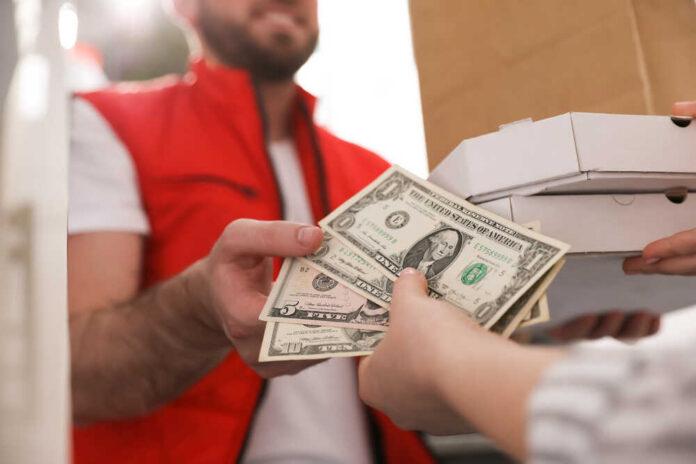
A single sentence on a pizza box exposed the dirty little secret of modern delivery: the “fee” you pay often has nothing to do with the person who shows up at your door.
Story Snapshot
- Papa John’s printed message, “DELIVERY FEE IS NOT A TIP,” went viral and detonated a familiar fight over tipping culture.
- Customers read the reminder as corporate guilt-tripping; drivers read it as a survival note in an economy built on add-ons.
- Third-party delivery complicates the basics: online tips may not reliably follow the order to the driver.
- Polls show Americans increasingly believe tipping has spun out of control, especially when prompted everywhere.
The Pizza Box That Picked a Fight With Everyone
Papa John’s didn’t need a press release to spark a national argument; it just needed ink. The box message was blunt: the delivery fee is not a tip, so please reward your driver.
A TikTok video of that line ricocheted online, turning a routine Friday-night purchase into a referendum on who pays workers. Customers asked why a delivery fee exists if not to pay the driver, and whether chains use reminders to shift responsibility.
Papa John's customers fuming over 'ridiculous' tipping reminder on their pizza boxes: 'WTF are we paying a delivery fee for?' https://t.co/E06ewtXfpt pic.twitter.com/4PMRKKdWOj
— New York Post (@nypost) April 21, 2026
That backlash didn’t come from nowhere. People over 40 remember tipping being simple: restaurants, bars, maybe a bellhop. Now the “tip screen” appears at kiosks and counters where nobody serves you.
The box message landed inside that fatigue, sounding less like transparency and more like a scolding note tucked under the pepperoni. The problem for brands: customers already feel nickel-and-dimed, and they take it out on the last prompt they see.
Delivery Fees, Tips, and the Problem of Plain English
“Delivery fee” sounds self-explanatory, so most consumers assume it covers the cost of delivery labor. Companies often treat it differently, using it to offset operating costs like insurance, mileage, technology, and dispatch.
That distinction may satisfy accountants, but it collides at the kitchen table. When a fee rises, and a tip prompt follows, the customer hears one message: pay twice or feel guilty about it.
The box wording tried to solve that confusion by separating the fee from the tip. The irony is that clarity can feel manipulative when the underlying system still leaves workers dependent on optional generosity.
Two Driver Economies: Direct Employees vs. App Contractors
Pizza delivery now runs on two overlapping labor models. Some drivers work directly for the restaurant brand, and in that setup, Papa John’s drivers have been described as receiving full online tips.
A second model uses third-party drivers through apps such as DoorDash or Uber Eats, and that’s where stories get messy. Drivers have reported situations in which tips appear to vanish, or orders arrive labeled “no tip,” leaving them to wonder whether a platform or store diverted them.
That uncertainty changes customer behavior in ways companies rarely admit. Drivers online advise cash tips because cash can’t be “misrouted,” reduced by processing, or delayed.
Customers hear “cash only” and immediately think of two things: tax avoidance and the sense that the system is broken. Nobody should need insider knowledge to compensate a worker. When the process feels rigged, good customers get stingy out of self-defense, and bad actors get cover to stay cheap.
Why America Is Snapping at Tip Prompts
Surveys highlighted in coverage of the viral moment show the mood: large majorities say tipping feels out of control, and many admit they tip out of guilt rather than satisfaction.
That matters because guilt is a short-term fuel. It buys compliance today and resentment tomorrow. Tipping originally functioned as a performance bonus, a voluntary “thank you” for excellent service. The modern version often feels like an automatic surcharge with a smiley face.
Brands underestimate how quickly resentment spreads when money is tight. Most households don’t care about corporate theories of cost allocation; they care about the total that hits their card.
When the checkout page stacks the delivery fee, service fee, small-order fee, and then a tip prompt, consumers feel played.
The Real Lesson for Companies: Don’t Make Customers the HR Department
Papa John’s box message became the villain because it sounded like the company was deputizing customers to solve a staffing problem. That may not have been the intent. Chains face real competition for drivers, higher insurance and fuel costs, and a delivery ecosystem warped by apps.
Still, messaging matters. A reminder to tip can be honest, but it lands better when paired with visible fairness: clear fee explanations and credible assurance that the worker actually receives the money.
Common sense says a business should set prices that sustain its operation, including labor, and then compete on quality. Tipping can remain for genuinely outstanding service, but only if it returns to being optional and trustworthy.
If a brand wants customer goodwill, it should remove ambiguity: define the delivery fee in plain language, avoid guilt-based prompts, and ensure tips follow the driver without drama. Otherwise, the next viral outrage is already printing.
Papa John's box message telling customers to tip delivery drivers sparks fierce tipping culture debate online https://t.co/US3b8QIv3J
— FOX Business (@FoxBusiness) April 21, 2026
Customers will keep ordering pizza, but they won’t keep donating to a system they don’t believe. The box didn’t start the tipping culture war; it simply revealed the front line.
When people feel cornered into paying extra, they rebel in the only way available: they stop tipping, stop ordering, or go public. That outcome hurts drivers first and eventually forces companies to choose between real wage solutions and permanent distrust.