
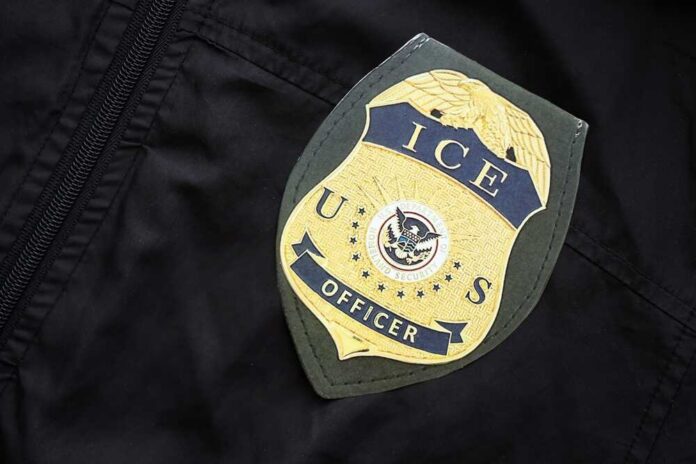
Airport security lines are becoming the latest battleground in Washington, now with the threat of ICE agents stepping in if Democrats keep DHS funding stalled.
Quick Take
- President Trump said ICE could be deployed to U.S. airports as early as Monday, March 23, if Democrats do not agree to fund DHS.
- A partial government shutdown has left TSA officers unpaid, driving resignations and call-outs, worsening airport wait times during spring travel.
- Democrats have tied DHS funding to new restrictions on ICE after controversial incidents, while the White House has offered limited concessions that were rejected.
- Officials and experts warn that ICE is not trained to perform TSA’s aviation security screening role, raising operational and safety questions if the threat becomes a reality.
Trump’s Monday ICE Warning Raises the Stakes in the DHS Funding Fight
President Donald Trump used a Saturday, March 21, Truth Social post to warn that Immigration and Customs Enforcement agents could be sent into U.S. airports starting Monday, March 23, if Democrats continue blocking Department of Homeland Security funding.
Trump framed the move as a response to growing Transportation Security Administration staffing shortages and long security lines, adding that ICE would also arrest illegal immigrants encountered at airports. As of March 22, the threatened deployment remained a pressure tactic, not a confirmed operational order.
BREAKING: President Trump is deploying ICE at US airports to assist TSA agents beginning on Monday. pic.twitter.com/OoC4nx7xad
— The Kobeissi Letter (@KobeissiLetter) March 22, 2026
Trump’s public threat is unfolding during the fifth week of a partial shutdown affecting DHS components, including TSA pay. Reports from major hubs described sharply longer waits beginning Friday, March 20, with some travelers facing delays well beyond normal screening times.
The timing is politically and practically sensitive because it coincides with heavy spring travel, when any staffing disruption quickly cascades into missed flights, crowding, and further strain on airport operations.
Shutdown Pressure Hits TSA Staffing, Experience, and Morale
TSA’s problem is not simply crowd volume; it is a staffing spiral driven by pay disruption and burnout. Reporting cited more than 366 TSA officers resigning during the shutdown, with additional absences linked to workers being unable to cover work-related travel costs or even sleeping at airports.
TSA officers are also facing another missed paycheck on March 27 if funding is not restored. Airports have attempted to help with basics like meals and parking, underscoring how thin the system has become.
The operational risk is that aviation screening depends on trained routines and accumulated experience. Some experts warned that when trained screeners leave, they take hard-earned institutional knowledge with them—skills that can take months to rebuild, especially for complex tasks like identifying prohibited items in X-ray images.
That warning matters because it frames the dispute as more than a political standoff: extended instability can degrade the very screening capacity travelers assume is always there.
ICE at Airports: Immigration Enforcement Versus Aviation Security
ICE and TSA sit under the same DHS umbrella, but they are designed for different missions. TSA was built as the dedicated aviation-security screening force after 9/11, while ICE’s core function is immigration enforcement.
Critics highlighted a basic limitation: ICE agents are not trained to run passenger screening checkpoints, operate TSA screening equipment, or manage the specialized flow of aviation security screening. Supporters of Trump’s idea argue the priority is restoring order quickly and enforcing immigration law where violations are found.
The dispute also has a cultural and constitutional dimension because it blends routine travel with immigration enforcement in a highly visible public setting. Trump’s message emphasized arrests of illegal immigrants and singled out Somali immigrants in his rhetoric, tying the issue to Minnesota politics and criticism of Rep. Ilhan Omar.
The available reporting does not show that any Monday deployment had occurred yet, meaning the practical details—scope, legal authorities used, and how ICE would interact with TSA functions—remained unclear as of March 22.
Why Democrats and the White House Are Deadlocked on ICE Oversight
Negotiations have been complicated by Democrat demands for tighter controls on ICE activities following earlier 2026 Minneapolis shootings of citizens Alex Pretti and Renee Good by ICE agents, which fueled calls to limit ICE authorities.
Senate Minority Leader Chuck Schumer criticized the White House offer made March 17 as “unacceptable,” after the administration proposed measures such as ICE body cameras, limits at sensitive sites, and visible ID while rejecting demands involving warrants and restrictions on masks. Republicans have opposed separating TSA funding from broader DHS negotiations.
From a limited-government perspective, shutdown brinkmanship creates a predictable cycle: Washington starves basic functions, then proposes emergency workarounds that expand enforcement power in everyday life.
The sources available show Trump’s airport-ICE plan is still a threat meant to force a funding outcome, and outlets differed on tone, not on the core facts of the standoff. Until funding is resolved or a formal order is issued, travelers should expect continued delays, and lawmakers will keep testing how much disruption the public will tolerate.
Sources:
Trump Threatens to Deploy ICE Agents to U.S. Airports Amid Funding Impasse
Trump threatens deploy ICE agents airports amid funding fight, vows arrests illegal aliens