

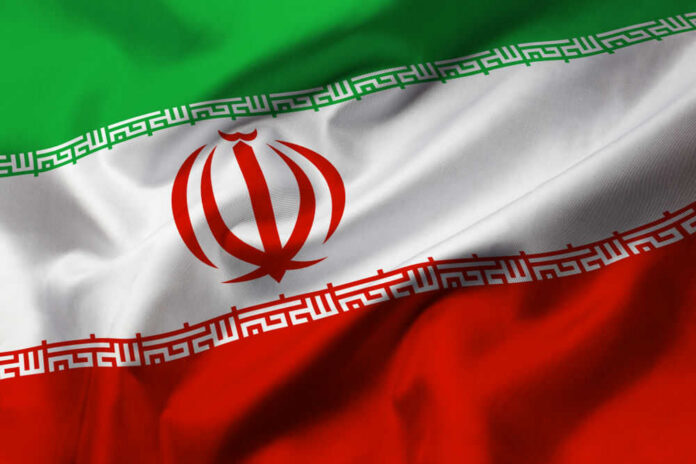
Iran announced a temporary closure of the Strait of Hormuz—a waterway carrying 20% of the world’s oil—while simultaneously sitting down for nuclear talks with the United States, demonstrating Tehran’s willingness to hold global energy markets hostage as a bargaining chip.
Story Snapshot
- Iran closed the Strait of Hormuz on February 17, 2026, for live fire drills during indirect nuclear negotiations with the U.S. in Geneva
- This marks the first announced closure of the critical oil chokepoint since President Trump threatened military action and deployed naval assets to the region
- Iranian Foreign Minister Abbas Araghchi expressed optimism after talks, stating “a new window has opened” for reaching a nuclear agreement
- The dual strategy of military threats and diplomatic engagement reveals Iran’s attempt to negotiate from a position of manufactured strength despite recent military setbacks
Iran’s High-Stakes Military Brinkmanship
The Islamic Revolutionary Guard Corps launched a military exercise titled “Smart Control of the Strait of Hormuz” on February 16, 2026, followed by Iran’s formal announcement of the Strait’s temporary closure the next day. Iranian forces fired live missiles from inside Iran and along its coast toward targets in the Strait, with state media claiming successful strikes.
The closure was justified for “safety and maritime concerns,” though the actual implementation remained unclear. This represents the first time Iran has publicly announced such a closure since the 1980s Iran-Iraq War, when the regime mined the waterway.
Iran partially closed the strategically vital Strait of Hormuz on Tuesday, state media reported, citing “security precautions” as Tehran’s Revolutionary Guards conduct military drills in the waterway. https://t.co/0Wbx7GQzce pic.twitter.com/HudTsdibth
— CNBC (@CNBC) February 17, 2026
Diplomatic Theater Amid Military Posturing
While Iranian missiles flew toward the Strait, indirect nuclear talks between Iran and the United States commenced in Geneva on February 17, mediated through the International Atomic Energy Agency. The initial round lasted approximately three hours, with IAEA Director General Rafael Grossi providing technical expertise to both parties.
Foreign Minister Araghchi stated before talks that he arrived “with real ideas to achieve a fair and equitable deal,” adding pointedly that “submission before threats” was not on the table. This simultaneous approach of military intimidation and diplomatic engagement represents classic Iranian negotiating tactics—threaten global economic stability while claiming victimhood.
Background of Escalating Tensions
The current standoff follows a June 2025 Israeli military campaign that devastated Iran’s nuclear infrastructure, air defenses, and ballistic missile arsenal. The U.S. subsequently bombed Iranian nuclear sites, likely destroying numerous uranium enrichment centrifuges. These strikes halted months of prior U.S.-Iran nuclear negotiations.
Following the attacks, Iran’s Parliament voted to close the Strait, with Revolutionary Guards commander Esmaeil Kousari confirming the closure would be executed “whenever necessary” to protect national sovereignty. In January 2026, President Trump threatened military action and deployed the USS Abraham Lincoln and accompanying guided-missile destroyers to the region.
Trump’s Strength-Based Approach
President Trump stated he planned involvement in talks “at least indirectly” and expressed confidence that Iran “wants to make a deal,” adding “I don’t think they want the consequences of not making a deal.” This assessment reflects the Trump administration’s belief that maximum pressure through military deterrence and economic sanctions can compel Iranian concessions.
The deployment of the USS Gerald Ford alongside the USS Abraham Lincoln and accompanying destroyers demonstrates overwhelming U.S. naval superiority in the region. Supreme Leader Ayatollah Ali Khamenei responded with threats, warning that “the strongest army in the world might sometimes receive such a slap that it cannot get back on its feet.”
Global Economic Implications and Energy Security
The Strait of Hormuz remains one of the world’s most critical maritime chokepoints, with approximately 20% of global oil supply passing through this narrow waterway. Any disruption—even temporary or symbolic—creates immediate uncertainty in global energy markets, potentially triggering oil price spikes and supply chain disruptions.
Danny Citrinowicz, an Iran expert at Israel’s Institute for National Security Studies, characterized the announced closure as “a clear message to the international community that any strike on Iran would have global impact.”
This strategy reveals Iran’s recognition that its ability to harm Western economies through energy disruption remains its primary leverage despite significant military disadvantages following the June 2025 Israeli strikes.
Uncertain Path Forward
Following the February 17 talks, Foreign Minister Araghchi adopted a notably optimistic tone, stating that Iran and the U.S. had reached an understanding of “guiding principles,” though cautioning that “more work still needs to be done.” The simultaneous military posturing and diplomatic engagement suggest both parties recognize the costs of conflict but remain far apart on substantive nuclear program terms.
Iran insisted negotiations focus exclusively on nuclear issues, refusing to discuss its January 2026 protest crackdown that activists claim killed at least 7,015 people. The trajectory of these negotiations will significantly influence regional stability and global energy security throughout President Trump’s term, with the risk of accidental escalation remaining high given elevated military activity in the Persian Gulf.
Sources:
Iran Partially Closes Strait of Hormuz Amid Nuclear Talks With US – WBZ NewsRadio