
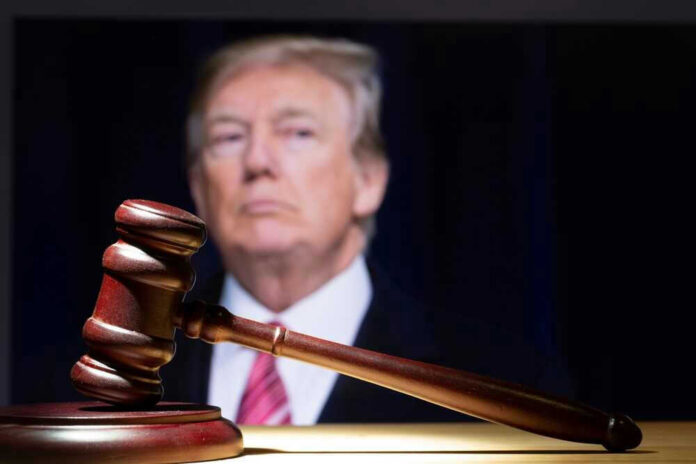
President Trump’s unprecedented attempt to federalize National Guard troops against the will of Democratic governors has quietly collapsed following a series of stinging court defeats that reaffirmed state sovereignty and exposed the limits of executive overreach.
Story Snapshot
- Trump withdrew federalized National Guard troops from Los Angeles, Chicago, and Portland by January 21, 2026, after the Supreme Court and federal judges blocked the deployments as unconstitutional overreach.
- The failed deployments cost taxpayers nearly $500 million while troops had minimal impact on crime, which had already dropped 14% before federalization began in June 2025.
- Federal courts rejected Trump’s “rebellion” justification, setting a critical precedent that limits presidential power to militarize cities without the governor’s consent or a genuine emergency.
- Democratic governors Gavin Newsom and JB Pritzker scored major legal victories defending state authority, while Trump’s deployment in D.C. continues despite similar court rulings deeming it illegal.
Courts Halt Unprecedented Federal Power Grab
President Trump announced the withdrawal of federalized National Guard troops from three Democrat-led cities after the Supreme Court issued decisive rulings blocking the deployments.
The Pentagon confirmed that complete demobilization from Los Angeles, Chicago, and Portland would be completed by January 21, 2026, ending a seven-month confrontation between federal executive authority and state sovereignty.
Trump invoked Title 10 authority in June 2025 to federalize state Guard units without the governor’s consent, claiming “rebellion” justified bypassing the Posse Comitatus Act’s restrictions on domestic military law enforcement.
Federal judges systematically rejected these claims, with an Oregon court ruling on October 4 that no rebellion existed amid documented crime reductions.
Half-Billion Dollar Taxpayer Burden With Minimal Results
The deployments cost taxpayers approximately $500 million nationally, including $120 million shouldered by California alone for over 5,000 federalized Guard members.
Despite Trump’s claims that troop presence reduced crime, data showed homicides had already dropped 14% in targeted cities before deployments began.
Troops had severely limited operational roles because court-imposed restrictions prevented law enforcement activities, leaving many Guard members patrolling ICE facilities or performing administrative tasks.
Illinois Governor JB Pritzker’s lawsuit highlighted that Chicago troops made only brief ICE appearances before legal blocks halted meaningful deployment, undermining the administration’s stated public safety rationale while straining Guard readiness for legitimate state emergencies.
Trump quietly withdraws National Guard troops in retreat from blue cities after court losses https://t.co/B8ql9v65vZ
— Daily Mail (@DailyMail) February 11, 2026
Judicial Precedent Protects State Authority From Militarization
The Supreme Court’s intervention represents a pivotal turning point in limiting presidential domestic military powers, restricting Title 10 federalization to genuinely “exceptional” cases rather than routine urban policing.
California Attorney General Rob Bonta’s successful litigation established that misusing state Guard units for non-protective federal missions violates constitutional boundaries between state and federal jurisdiction.
This precedent directly counters the dangerous expansion of executive authority that conservatives rightly oppose when it tramples federalism principles embedded in the Constitution.
Governor Newsom framed the deployments as “costly political theater,” a characterization vindicated by courts, which rejected creating a federal “national police force” in peacetime urban settings without a legitimate insurrection or the governor’s cooperation.
D.C. Deployment Continues Despite Similar Legal Rejection
While Trump pulled troops from Democratic cities, National Guard forces remain deployed in Washington, D.C., indefinitely through at least July 2026, despite a federal judge ruling the deployment illegal with appeals pending.
A November 2025 shooting near the White House killed Specialist Sarah Beckstrom and injured Sergeant Andrew Wolfe, highlighting risks to Guard members thrust into politically motivated non-combat urban roles.
The administration also deployed troops to New Orleans on December 30, 2025, at Republican Governor Jeff Landry’s request for New Year’s Eve security, illustrating the constitutional distinction between state-requested assistance and federal overrides.
Trump warned troops could return to Democratic cities if crime rises, perpetuating concerns about politicized military deployment that erodes traditional boundaries protecting Americans from domestic militarization.
The demobilization reduces ongoing costs while restoring Guard units to state control for genuine emergencies, such as natural disasters or authentic civil unrest requiring the governor’s authorization.
Democrat governors leveraged their court victories to build national profiles by defending state authority against federal intrusion, principles that conservatives have historically championed to protect constitutional federalism.
The episode exposes tensions in Trump’s governing approach between legitimate law-and-order priorities and methods that risk normalizing the military presence in civilian spaces, without a proper legal foundation or measurable public safety benefits to justify extraordinary constitutional measures.
Sources:
Trump National Guard City Updates – Capital B News
Donald Trump National Guard Deployment – Politico
Trump Administration Retreats in Newsom Lawsuit Over National Guard Deployment – LA Times
Trump National Guard Withdrawal Chicago Los Angeles Portland – The Independent
Domestic Military Deployments by the Second Trump Administration – Wikipedia