

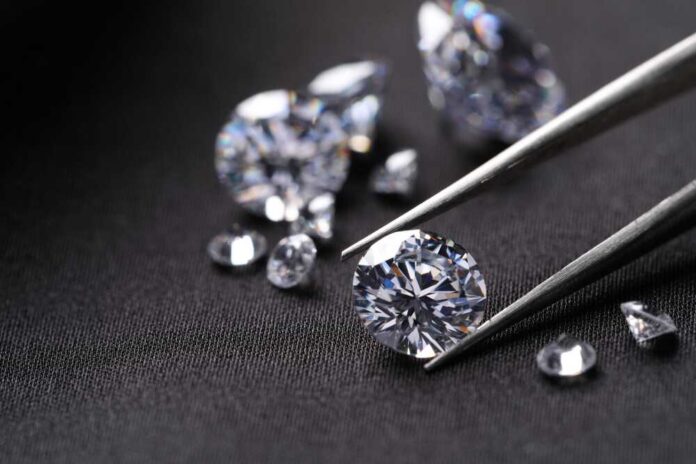
Wealthy investors are abandoning traditional markets for colored gemstones as the “Big Three” rubies, emeralds, and sapphires surge to record prices, positioning these rare stones as portable wealth alternatives to volatile diamonds and overprinted government currencies.
Story Snapshot
- Colored gemstone prices soar in 2026, with untreated Burmese rubies commanding triple the premium of heated stones, reaching $50,000-$100,000 per carat
- GIA’s January 2026 grading standards revolutionize the market by emphasizing ethical sourcing and origin transparency, redirecting capital from lab-grown diamonds
- High-net-worth individuals drive 15% demand increase for natural gemstones as hard assets, with the market projected to reach $50-80 million by 2030
- Blockchain certification closes price gaps between ethical African mines and traditional sources, rewarding ESG-compliant operations with premium valuations
GIA Standards Transform Gemstone Investment Landscape
The Gemological Institute of America launched revolutionary grading standards on January 1, 2026, fundamentally reshaping how wealthy consumers evaluate colored gemstones.
These new protocols prioritize ethical sourcing, origin verification, and the authenticity of untreated stone over traditional criteria alone.
The shift empowers investors to distinguish genuine portable wealth from enhanced or questionable merchandise.
Blockchain certificates now accompany premium stones, providing verifiable chain-of-custody documentation that wealthy buyers demand.
This transparency breakthrough establishes a “sovereign standard” for investment-grade gems, mirroring conservative principles of accountability and verifiable value rather than government-manipulated fiat markers.
Wealthy consumers are turning to jewelry as an investment, especially colored gemstones https://t.co/wXqVQ43KKq
— CNBC (@CNBC) March 22, 2026
Diamond Market Collapse Redirects Capital to Rare Stones
Lab-grown diamonds decimated white diamond values throughout 2023-2024, eroding consumer confidence in traditional diamond investments and triggering capital flight among high-net-worth individuals.
Wealthy investors recognized the manufactured stone glut as artificial market manipulation, undermining natural scarcity principles that underpin real wealth preservation.
The Argyle mine closure prior to 2026 tightened the supply of fancy color diamonds, but savvy investors pivoted to colored gemstones with superior appreciation potential.
Fancy color diamonds rose only 3-8% during 2025, while unheated sapphires became the fastest-appreciating gemstone category.
This market reorientation demonstrates how artificial interference destroys value, rewarding those who anchor wealth in genuine scarcity.
Untreated Stones Command Unprecedented Premiums
Investment-grade rubies now fetch $10,000-$100,000 per carat, with unheated Burmese “Pigeon Blood” specimens commanding a threefold premium over heat-treated equivalents.
Emeralds range from $6,000 to $60,000 per carat, while sapphires fetch $4,500 to $40,000 per carat, with exceptional liquidity in untreated varieties.
The “No Heat/No Oil” movement reflects conservative investment wisdom: genuine, unaltered assets hold superior value compared to manipulated alternatives.
Wealthy buyers increasingly demand certification proving stones remain in natural condition, rejecting industry practices that artificially enhance appearance.
This preference aligns with constitutional principles of transparency and honest commerce, penalizing deceptive enhancement practices that plagued previous gemstone markets.
Ethical Mining Operations Gain Competitive Advantage
Miners in Zambia and Mozambique now compete directly with traditional heritage sources by leveraging blockchain verification and ESG compliance to justify premium pricing.
The 2026 “Clean Gem” movement rewards operations demonstrating ethical labor practices and environmental stewardship, closing historical price gaps that favored Burmese and Kashmir sources regardless of mining conditions.
Millennials and Generation Z investors drive this shift, demanding vibrant luxury products aligned with verifiable ethical standards rather than empty corporate virtue signaling.
Industry analysts at Bain & Company forecast 5-12% annual appreciation for rare colored stones, with the global colored gemstone segment maintaining 5-6% compound annual growth rate through 2030, significantly outpacing inflation and traditional fixed-income alternatives.
Auction houses, including Sotheby’s and Christie’s, validate the resilience of colored gemstones through record sales, with blue diamonds fetching $2-4 million per carat and establishing comparable benchmarks for exceptional rubies and emeralds.
Luxury jewelers and B2B platforms like CaratX and Gemsroot facilitate liquidity, enabling investors to treat gemstones as tradeable hard assets rather than illiquid collectibles.
Smart buyers also target emerging stones, including alexandrite, spinel, and tsavorite garnet, which offer compelling potential for value appreciation at lower entry points.
This diversification strategy mirrors sound conservative financial planning: building wealth through tangible assets with intrinsic scarcity rather than paper promises subject to government debasement and regulatory overreach.
Sources:
Colored Stone Price Trends 2026 Guide – Gems and More
The Rise of Coloured Gemstones in Luxury Jewellery – Trend Vision Forecasting
Why 2026 Will Be a Historic Turning Point for Fancy Color Diamond Buyers & Investors – CaratX
Trending Gemstone Colors Market – Christopher Duquet
10 Best Gemstones to Invest – Gemsroot
The Colored Gemstone Gold Rush 2026 – Jewelry Appraisal Denver
High Jewelry Gemstones 2026 – Diamonds N Colors